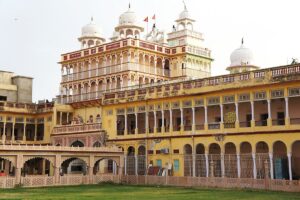
Discover Rani Sati Temple: The Heritage Pride of Jhunjhunu
Location Importance
-
The Crown of Shekhawati: Situated in the historic town of Jhunjhunu in Rajasthan, the Rani Sati Temple is one of the largest and most architecturally magnificent religious complexes in the Shekhawati region.
-
Cultural and Ancestral Anchor: It serves as the global spiritual headquarters for the millions of devotees of Rani Sati Dadi (believed to be an avatar of Goddess Narayani), attracting a massive influx of diaspora family pilgrims year-round.
-
A Living Marwari Legacy: Positioned beautifully in northern Rajasthan, the temple stands as a monumental testament to traditional Marwari craftsmanship, community heritage, and multi-century old devotional traditions.
Major Attractions
-
The Main Jhunjhunu Shrine: A multi-storeyed, palatial temple complex built entirely out of pristine white Italian marble, featuring a striking multi-tiered design that mimics royal Rajasthani palaces.
-
The Inner Sanctum (Garabh Griha): The sacred core of the temple which uniquely contains no physical statues or idols; instead, a large, beautifully adorned metallic trident (Trishul) is worshipped as the primary symbol of cosmic power and energy.
-
The Twelve Secondary Temples: A series of smaller, beautifully sculpted shrines located within the same massive complex, dedicated to various Hindu deities including Lord Shiva, Lord Ganesha, and Goddess Durga.
-
The Intricate Glass Artwork: The spectacular, vibrant mosaic glasswork and traditional frescoes lining the ceilings and walls of the main prayer halls, showcasing classic Rajasthani artistic heritage.
Activities to Do Near
-
Attending the Bhado Amavasya Festival: Planning a visit during the highly sacred Bhadrapada Amavasya (usually in August or September) to witness the grand annual fairs, massive devotional gatherings, and special heritage rituals.
-
Exploring Jhunjhunu’s Frescoed Havelis: Taking a short walking tour outside the temple grounds to explore the town’s world-famous historical Havelis, renowned for their stunning, centuries-old exterior wall paintings.
-
Visiting Modi and Kanchanani Havelis: Photographing the spectacular architecture of nearby heritage homes that showcase the peak of the region’s affluent trading-era design.
-
Savoring Traditional Rajasthani Dal Baati: Exploring the local traditional eateries around the temple market to feast on authentic, ghee-laden Dal Baati Churma and local milk sweets.